

Fulton Sheen, Homer, and Christ-Centered Mythology
By John Tuttle, Contributing Writer
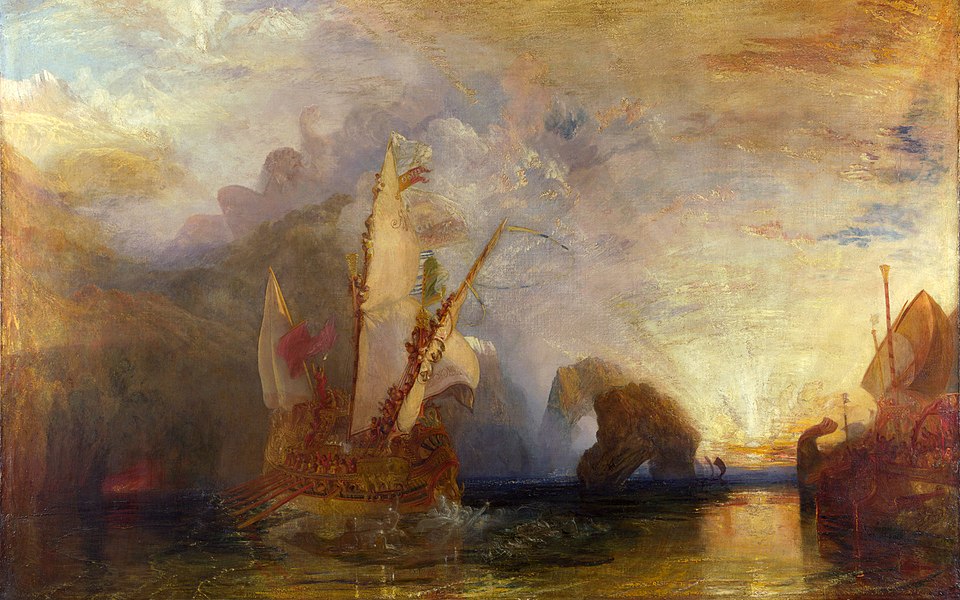
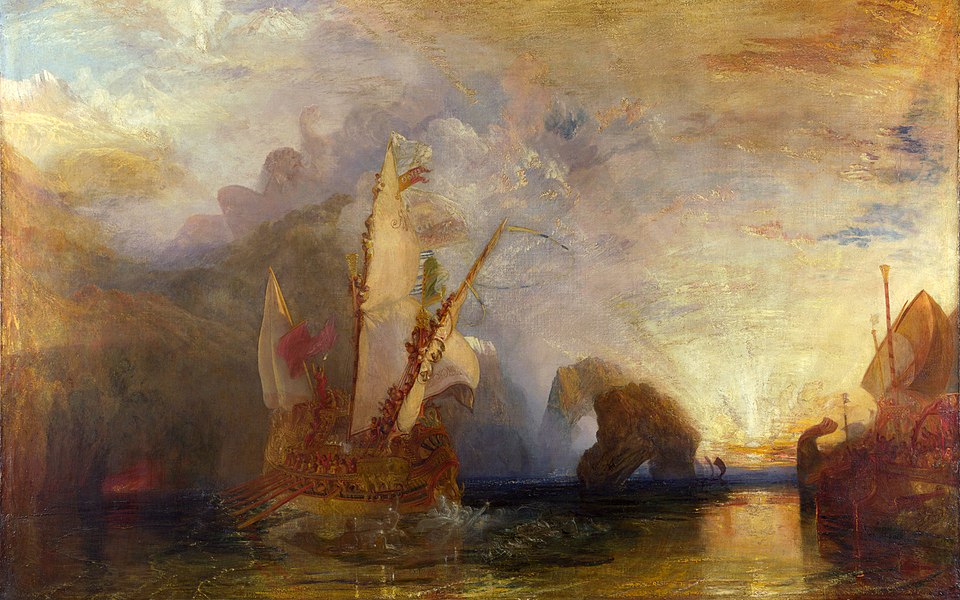
A nearly three-thousand-year-old epic has sparked renewed interest among modern readers with the release of this year’s summer blockbuster The Odyssey. First orated in front of live audiences, then written down into a long-form poem and subsequently translated, novelized, and developed across other mediums, there’s no shortage of forms that the Odyssey—like Athena within the story—has shape-shifted into.
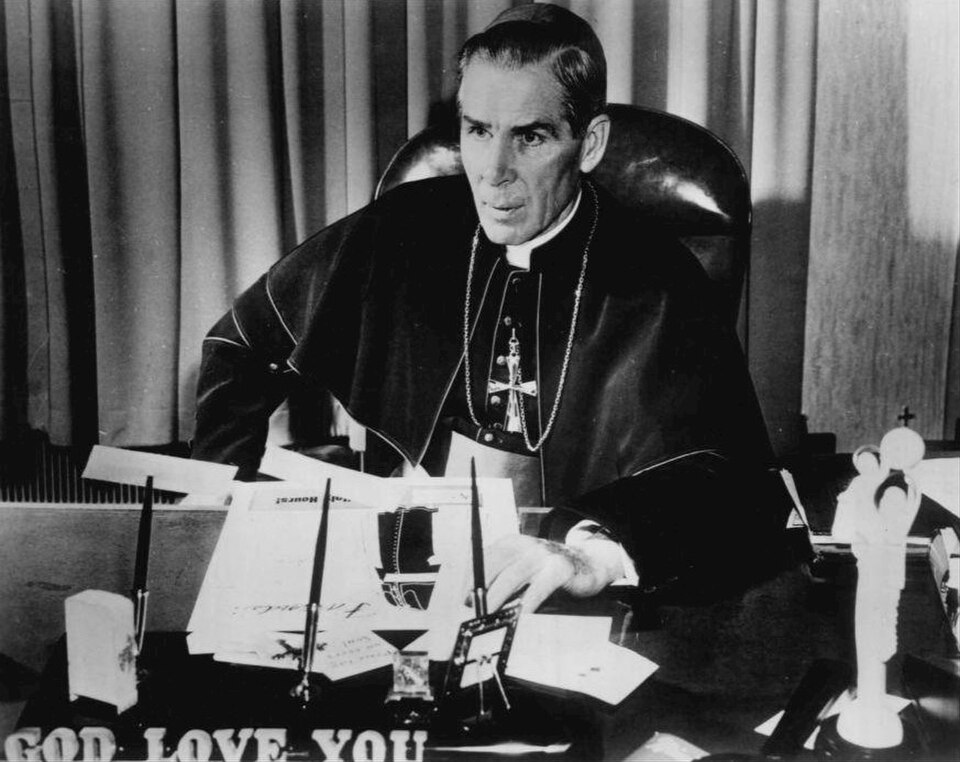
With its rich and varied history, many of the Odyssey’s details serve as fodder for scholarly debate. The soon-to-be-Blessed Fulton J. Sheen had a unique take on the meaning of some of the principal characters of the Odyssey and its prequel, the Iliad.
Glimpses of Jesus and Mary in Homer’s Epics
Fulton Sheen begins one of his short books, Seven Words of Jesus and Mary, with the following:
One thousand years before Our Blessed Lord was born, there lived one of the greatest poets: the glorious Homer of the Greeks. Two great epics are ascribed to him: one the Iliad; the other, the Odyssey. The hero of the Iliad was not Achilles, but Hector, the leader of the enemy Trojans whom Achilles defeated and killed. The poem ends not with the glorification of Achilles but of the defeated Hector.
The other poem, the Odyssey, has as its hero, not Odysseus, but Penelope, his wife, who was faithful to him during the years of his travels. As the suitors pressed for her affections, she told them that when she finished weaving the garment they saw before her, she would listen to their courtship. But each night she unraveled what she had woven in the day, and thus remained faithful until her husband returned. “Of all women,” she said, “I am the most sorrowful.” Well might be applied to her the words of Shakespeare: “Sorrow sits in my soul as on a throne. Bid kings come and bow down to it.”
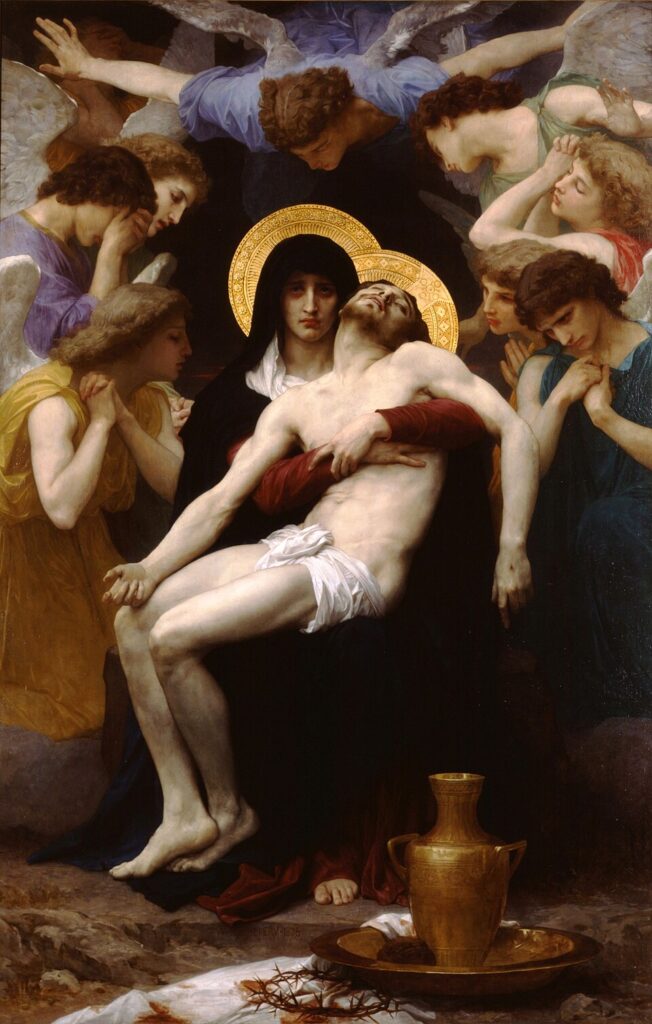
For a thousand years before the birth of Our Blessed Lord, pagan antiquity resounded with these two stories of the poet who threw into the teeth of history the mysterious challenge of glorifying a defeated man and hailing a sorrowful woman. How, the subsequent centuries asked, could anyone be victorious in defeat and glorious in sorrow? And the answer was never given until that day when there came One who was glorious in defeat: the Christ on His Cross and one who was magnificent in sorrow: His Blessed Mother beneath the Cross.
Whew! Let’s unpack what the late archbishop is saying. Fulton Sheen clearly points to Hector, glorious in death, as a Christ figure, and to Lady Penelope as a character comparable to the Blessed Virgin Mary, on account of the sorrow met by both with courage and fidelity. The symbolism possessed by these fictitious characters, which Sheen ties to Jesus and Mary, goes deeper than the author explicitly states.
Hector’s Love in the Iliad
Hector, like all Christ figures apparent in fiction, is imperfect. But a few surface-level similarities stand out. The actions he takes, which inevitably lead to his mortal end, are rooted in love for others. Speaking of the Iliad, writer Paul Krause says that Homer highlights various forms of love, including filial or familial love, kindness toward others, and forgiveness toward one’s enemies. “The heroism that Homer sings of is not war but love, and it is the exclusive domain of us mortals which makes it so precious,” writes Krause.1 The most perfect love, he says, is that which can forgive grievances—the sort of love Achilles (Hector’s killer) and King Priam (Hector’s father) are able to eventually share between each other.
For his part, when he was still alive, Hector was a family man devoted to his wife and infant son. He displayed filial love. Just as Christ died out of love for us, Hector, out of love for his family, fought and died for his city and, more specifically, for those he loved. Stepping beyond the confines of a made-up story, Jesus Christ would, like Hector, make a sacrifice to defend those whom he loves (that’s you and me). He, too, paid the ultimate sacrifice. But our Lord’s sacrifice of his very life, like all things true and good, is lasting and effective.
Penelope’s Mary-Like Virtues in the Odyssey
After the Iliad comes its sequel, the Odyssey, which focuses on the homeward journey of Odysseus that is fraught with peril and misfortune. Odysseus is the king of Ithaca, making his wife Penelope a queen. It is the Queen of Ithaca whom Venerable Fulton Sheen praises for her fidelity to her husband in his absence. Maintaining this virtue becomes more difficult as dozens of suitors gather to try to win her hand in marriage. Meanwhile, Penelope hopes for word about the return of Odysseus. Her stalling tactics also showcase her wisdom. Further, Penelope experiences deep affliction at the loss of her spouse and at the pressure of the wanton suitors.
Almost all of these character traits—queenship, fidelity, wisdom, and sorrow—are applicable to our Mother, the Blessed Virgin Mary. As the Mother of Jesus, Mary is Queen of heaven and earth. In all things, she is faithful to God, her spiritual “spouse” in a certain sense. From her fidelity to God and his law blooms her wisdom. Lastly, Sheen reminds us that Mary stood at the foot of the Cross, watching her Son gasp out his final breaths. Her agony was here on Golgotha. This is why we remember her, in part, as Mater Dolorosa—Sorrowful Mother. It reminds us that Mary is so much more than a statue or stained glass window; she is a flesh-and-blood person, a woman, and a Mother.
“Pagan Christs” and the True Myth
Fulton Sheen goes a step beyond simply suggesting Hector and Christ, and Penelope and the Blessed Virgin, bear a certain resemblance. He offers Hector and Penelope as pagan precursors, perhaps types even, of the heroic and redemptive suffering that Jesus and Mary would experience. They lay a foundation for understanding the Suffering Servant and our Mater Dolorosa. The key to completing that foundation, Sheen says, is found nowhere else but in Jesus Christ, the turning point of all of history.
C.S. Lewis said something similar about other pagan myths. (In his autobiography, Treasure in Clay, Fulton Sheen listed Lewis as an influence on his own writing style, praising him as “one of the leading apologists of Christianity in the contemporary world.”) The characters that most strongly embody Christian realities in the tales that predate the Incarnation are what Lewis calls “Pagan Christs,” what we might call “Christ figures” in modern terms. In his book Reflections on the Psalms, Lewis gives several examples from writings outside the Jewish tradition that foreshadow the coming of Jesus and what his mission will entail. Such a pagan writer who expresses a glimmer of the divine “says what is truer and more important than he knows.” Lewis contends that one such writer is Virgil, who wrote of the return of a virgin, the simultaneous return to a time of peace, and a child who hails from heaven itself. All such murmurings beyond the Judeo-Christian comprehension of the world represent “instances of something said or written which takes on a new significance in the light of later events.” As far as Lewis is concerned, the poet Virgil “ranked as a Pagan prophet.” Lewis goes on to say:
The resemblance between these myths and the Christian truth is no more accidental than the resemblance between the sun and the sun’s reflection in a pond, or that between a historical fact and the somewhat garbled version of it which lives in popular report, or between the trees and hills of the real world and the trees and hills in our dreams . . .
Certainly, Fulton Sheen had a similar understanding of classic myths. Myths are sacred stories that shape a people’s understanding of the world and of themselves. J.R.R. Tolkien, a good friend of Lewis, had forever changed the way the latter viewed ancient pagan stories (and the Gospel) when he firmly stated that myths are not lies but vehicles of the truth. Tolkien believed that sometimes myths were the most effective means to communicate reality. As Joseph Pearce recounts this interaction, Tolkien, who was a devout Catholic, “explained to Lewis that the story of Christ was the true myth at the very heart of history and at the very root of reality.”
Sheen recognized the “true myth” at the center of it all—Jesus Christ, whom he loved dearly in the Eucharist, in Scripture, in the myths of the Iliad and the Odyssey, and in the person right in front of him. Perhaps we, too, can seek his presence in all things.
- Krause, Paul, Dante’s Footsteps: Poems and Reflections on Poetry, 60. ↩︎

John Tuttle is a Catholic husband and father. He is an editorial assistant at Midwest Theological Forum, a multimedia reporter, and a writer. His writing has been published by Catholic World Report, Catholic Insight, The Wanderer, The Collector, Englewood Review of Books, VoegelinView, Movieguide, Busted Halo, the Slant Books blog Close Reading, and his local diocesan newspaper The Observer. John, his wife Ellen, and their family live in Illinois.
Leave a Reply


access for free →
These professionally crafted, spiritually-inspired templates will help you create scroll-stopping posts in minutes. Skip the design struggle and share your message beautifully. Customize in Canva, post and get noticed. And yes, it's totally okay to swipe these!