

Keep All These Things in Your Heart
A Reflection on Our Lady of Sorrows
By Elizabeth Hamonko, Contributing Writer
One of the most popular Bible verses throughout the world is, unsurprisingly, one of comfort. You can see it written on the back of T-shirts, decorations in people’s houses, and cards given to those facing accidents or illnesses. This verse, Philippians 4:6, boldly proclaims:
Have no anxiety at all, but in everything, by prayer and petition, with thanksgiving, make your requests known to God.
In it, we see that something about the distress we feel as humans drives us to find examples of God’s love when we need comfort and strength.
Not only do we need holy words like these, but we also need holy examples. In moments of despair, who better to take as a model of this verse than the Blessed Mother herself?
The Sword that Pierces Hearts
As a sinless model of faith, Mary knew better than anyone how to petition for others, and how to make her whole life on Earth a prayer to God. What some may not fully realize when contemplating her life is that she also had to quietly live with the acceptance of what would eventually happen to her Son.
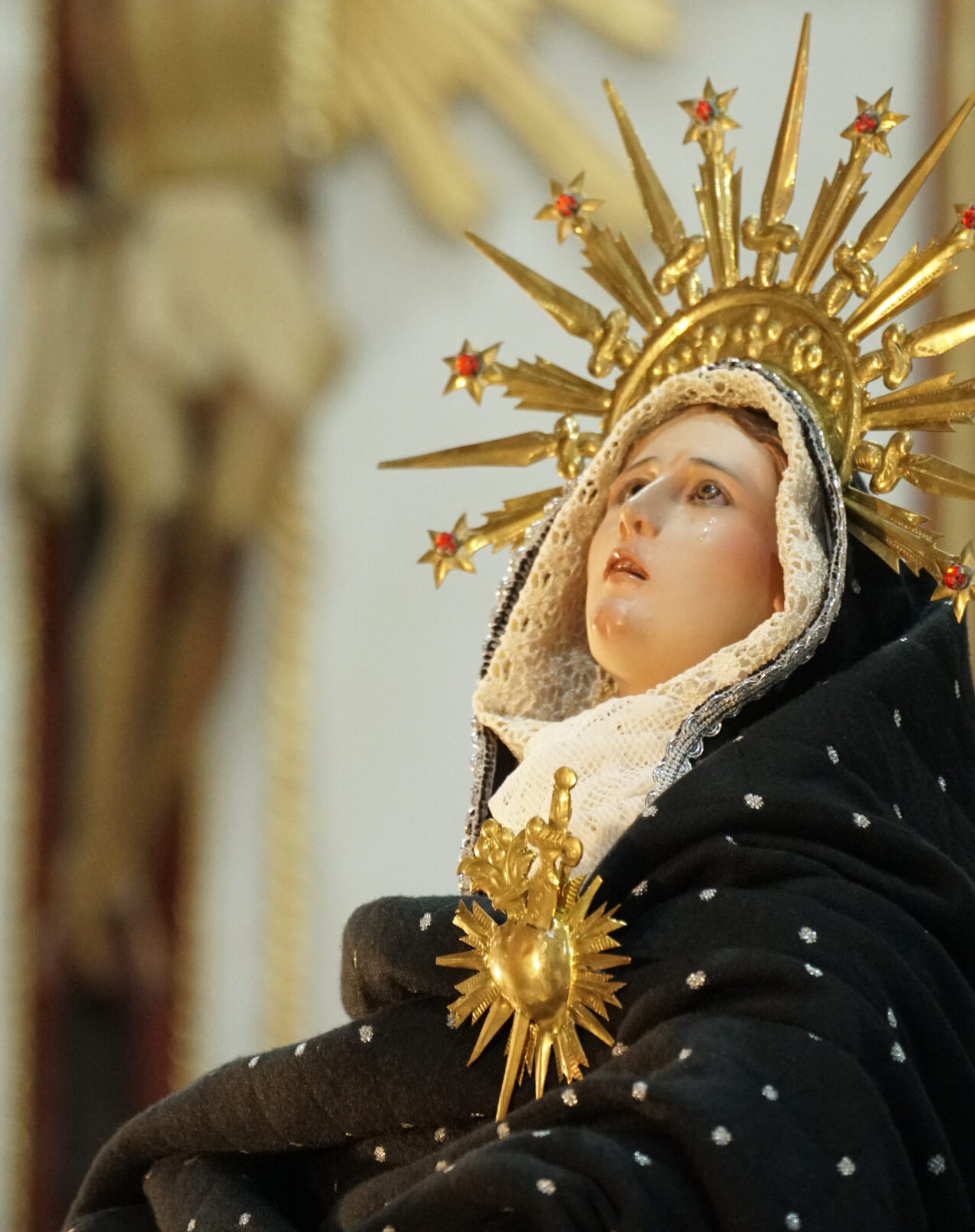
While they were visiting the Temple with the child Jesus, Mary, and Joseph were told by Simeon that a “sword shall pierce” Mary’s heart. Even today, these words resonate with people. The Church celebrates the feast day of Our Lady of Sorrows yearly, a title often depicted in art as Mary weeping while enduring the pain of this sword in her Immaculate Heart.
Originally inspired by an ancient hymn written around the 13th century, which described the dedication and pain in the heart of Mary while watching Jesus’ Crucifixion, this devotion became more commonly known as Our Lady of Compassion around the 15th century. Pope Innocent XII first dedicated the feast day for this title in 1692. Now, we celebrate it every September 15th under the title of Memorial of Our Lady of Sorrows.
The Pain in Our Lady’s Heart
When we look at historical art associated with this devotion, we see a clear understanding and reflection of how an imperfect world can cause grief. Through Mary’s eyes, we also see how even when the most despair-inducing scenario played out in her life, she responded with a sense of hope and love because of her knowledge of God. However, it did not mean she didn’t feel deep pain while going through these moments or that humans cannot acknowledge the amount of loss that we go through now, even though Our Lord is always triumphant in the end.

In our own lives, it makes sense to draw on Mary’s experiences when we face similar problems. From the prophecy of Simeon to the stress of the escape into Egypt after Christ’s birth or the finality of a mother seeing her Child’s dead body for the last time at His burial, the seven sorrows of Mary’s life that are commonly associated with this devotion can give us more insight into what she experienced. Often, these sorrows can bring to mind common experiences like the death of a loved one or the fear of instability in our daily lives, whether due to a natural disaster or any other traumatic event.
This devotion stands as a beautiful contrast. Within it, hope and despair are side by side—and neither one is seen as less worthy of examination when it comes to the human experience. Since we continually encounter both good and bad in our lives, this kind of duality is a reflection of not only what struggles we have to endure in this world but also the beauty of God and the peace that He gives.
It is important to know that she weeps not only for what her Child went through physically and mentally, but also because of the evil that leads to sin in general. She was in pain because she knew how much He loves us and how much it hurts Him to have us turn away. We not only have a Father who knows our pain and sees our weaknesses, but a mother who does as well and wants to pray for us.
Her example of love for others can help prevent us from falling into hatred and stewing in our own frustration when our pain comes from others. Instead, we can imitate how she prays for all people, truly understanding Christ’s words that they “know not what they do” and that God hears our prayers.
Our Necessary Trust
Even the ability to avoid sin does not mean one can avoid suffering. Mary and Joseph were fearful when they discovered that Jesus had stayed behind in the temple after leaving Jerusalem. In these moments of questioning why something happened to us in particular, stopping to ponder more about Our Lady’s state of mind may help.
Was Mary dispassionate about finding Christ just because she knew of His eventual triumph over sin and death? Was she unconcerned or slow to act because of her faith? We know the answer and can confidently say: not at all. We actually see a radically different reaction from this potential one as she approaches Him after the three days and states, “Son, why have you done this to us? Your father and I have been looking for you with great anxiety” (Luke 2:48).
Besides being a beautiful foreshadowing of the three days between Christ’s eventual death and resurrection, these verses are a great example of how to act in times when we feel we have no roadmap on what to think or feel.
Mary was honest and thoughtful as she “kept all these things in her heart” (Luke 2:51) during her life. Reaching out to God with this level of raw emotion in our own lives may seem hard at first. Sometimes, we could feel like we need to “tidy up” what we feel or think, but that may end with us not praying at all. However, part of trusting God includes trusting Him with our most vulnerable inner thoughts. Taking this first step is a great sign of that trust.
Our Own Sorrow and Joy
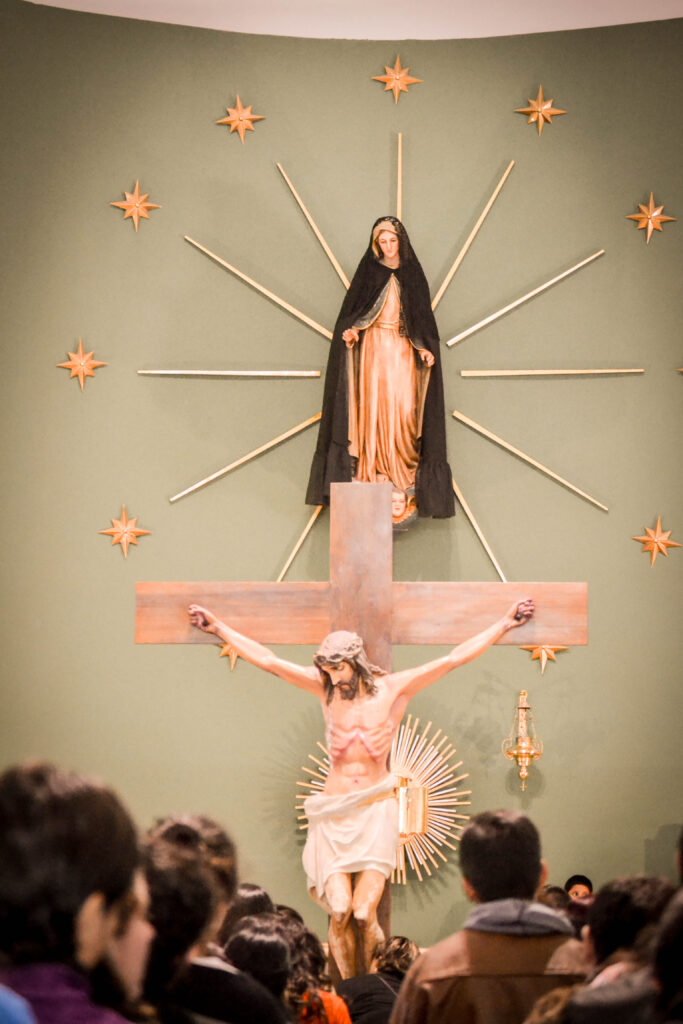
Maybe our own lives are full of moments that lead us to despair or hopelessness. Maybe we can see the ways that situations and issues could be better, but day to day, we still have to endure the painful reality in front of us. Maybe we have regrets about our past. Our Lady, the model of longing for the truest good as she stood near the cross, is there under this title as a source of comfort and a reminder that the gap between where goodness should be and where this world is will eventually be restored in Christ.
Even when what we see leaves us wishing for things to change, acknowledging this gap in our hearts between what should be and what is can lead us to dive deeper into loving God. Taking the time to contemplate what He’s asking from us in particular is the first step.
In some circumstances, praying with the Seven Sorrows devotion may guide our hearts and help us realize how deeply we are loved by Christ and His saints. Although our personal sorrow may not go away, the endurance Mary showed can be a model of how to approach our lives and put our trust in God.
Our Lady of Sorrows, pray for us!

Due to a lifelong love for books and stories, Elizabeth Hamonko enjoys combining her passion for her faith with her enjoyment of writing. Together with a BS in Marketing and a BS in Management, her experience in freelance copywriting allows her to craft articles about anything from e-commerce to her Catholic faith. When she isn’t writing, she loves to run, attempt to bake, pray the Divine Mercy chaplet, and try all different kinds of coffee.
Leave a Reply


access for free →
These professionally crafted, spiritually-inspired templates will help you create scroll-stopping posts in minutes. Skip the design struggle and share your message beautifully. Customize in Canva, post and get noticed. And yes, it's totally okay to swipe these!