

Music Is Powerful: Tolkien, Lewis,
& Easter’s New Creation
By Matthew Chicoine, Contributing Writer
Music is powerful. Something inherent in music provides peace and joy amidst stress and turmoil. At least that is the experience I have when listening to music. There exists a certain universal quality to music that draws all mankind together.
And as Christians, we also recognize that Easter is not only a date on the calendar. It is God’s act of re-creation in Christ. The Church proclaims Easter as “the feast of the new creation,” where Jesus rises and draws all of us into new light and indestructible life.
Below I will provide examples from literature and the tradition of the Catholic Church to show evidence of music’s capacity to unite people through its creative power, especially as a kind of doorway into the Paschal Mystery.
Aslan’s Aria
Similar to the creation story in the Book of Genesis, the creation of Narnia takes place through the creative voice of Aslan [God]. Here is a brief excerpt from The Magician’s Nephew which gives the reader a glimpse into the inception of Narnia:
“A voice had begun to sing . . . There were no words. It was hardly a tune. But it was beyond comparison, the most beautiful sound he had ever heard.”
What’s striking is not only that Narnia is made, but that the world is made as something meaningful. It is as if reality is ordered and awakened through a kind of song. That intuition harmonizes with Easter: at Easter, God does not merely announce hope. He makes new life real.
In this sense, when Lewis depicts creation through a voice that sings, he is, perhaps indirectly, training our imagination to recognize a Christian truth. God’s Word makes life, and that life is renewed and surpassed in Christ’s Resurrection.
Words, Music, and Resurrection Hope
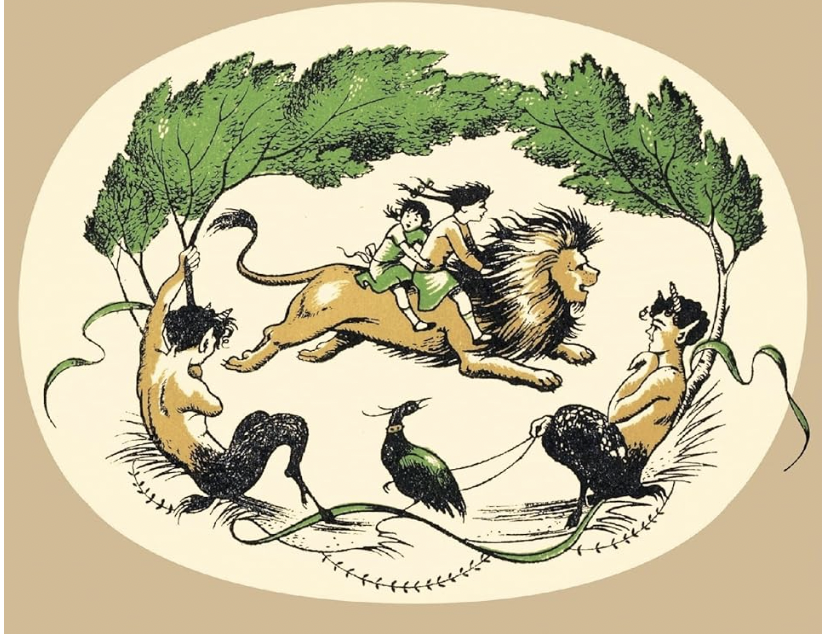
Words, especially clothed in music, possess a dynamic quality in C.S. Lewis’ Chronicles of Narnia. Reading Aslan’s Aria moved me. I felt closeness to Lewis’ literary universe and a pull to experience the transcendence of God through music.
In Christian terms, we might say: Easter shows that the “new day” is not an abstraction. It becomes a reality that draws us in. And this happens through Christ’s gift, received by faith. Pope Benedict XVI, speaking at the Easter Vigil, explains that through Baptism and the profession of faith, the Lord builds a bridge so that the new day reaches us: “Fiat lux,” let there be light. The early Church called baptism “photismos,” illumination.
Evidence from The Silmarillion
According to Peter Kreeft, in The Philosophy of Tolkien: The Worldview Behind The Lord of the Rings, “The most powerful and magical of language is music. The reason for this is that music is the original language. Music is the language of creation”.1 Similar to the creation of Narnia through Aslan’s song in The Magician’s Nephew, C.S. Lewis’ contemporary and friend J.R.R. Tolkien recognizes the creative and unifying power music holds in the creation of Middle-earth. In his great work The Silmarillion, Tolkien details the creation of the universe and Middle Earth through the creative power of music. Tolkien writes:
“Ilúvatar [God] said to them, ‘Behold your Music!’ . . . Behold your Music!”
I will refer back to Kreeft since he has a penchant for simplifying profound truths in easy, memorable, and digestible quotes. The Boston College professor states, “Poetry is fallen music, and prose is fallen poetry. In the beginning was music”2. This makes sense to me. Something innate within music truly moves the hardest of hearts and melts differences among enemies away. Poetry and prose contain residue of music, but still fall short of fully communicating the reality that music conveys through its medium.
And if Tolkien helps us sense a “beginning,” Easter helps us understand the completion. The Church teaches that the renewal of creation begins with the Resurrection of Christ and passes through the spiritual rebirth and renewal of each of us: “If anyone is in Christ, there is a new creation.”3
Musicam Sacram
Promulgated on March 5th, 1967, Musicam Sacram (Instruction on Music in the Liturgy) speaks of the importance and weight sacred music has and gives to the Mass. According to this Vatican II document, “The true purpose of sacred music is, the glory of God and the sanctification of the faithful.”4
Moreover, Musicam Sacram mentions that the celebration of the Holy Mass is provided a more noble form when it is celebrated in song, where, because people truly participate, “the unity of hearts is more profoundly achieved by the union of voices,”5 and minds are more easily raised to heavenly things by the beauty of the sacred rites.
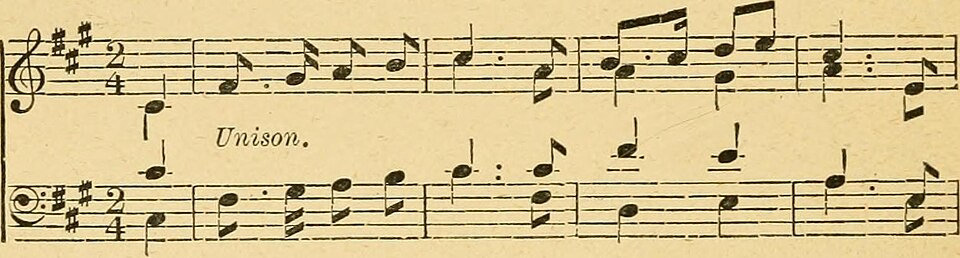
From my own personal experience, I concur with the assertion of the conciliar document that music enhances liturgical worship. Peace is a common fruit of singing at Mass. My oldest son is starting to learn the words to the songs, and I have noticed that when he sings throughout the Mass he is calmer. There is certainly a truth to the old adage: “Singing is praying twice!”6
From Creative Voice to the New Day
The Silmarillion and The Chronicles of Narnia are still relevant works of literature decades after they were initially published. Part of the mysterious appeal and timeless nature of Lewis’ and Tolkien’s works is their tapping into the creative power of music. Both men discovered the mysterious influence music has over mankind. Weaving melodious themes into the creation stories of their literary universes naturally draws people to wonder.
Almost everyone I know likes music of some sort, and that is not a coincidence. God uses music to unite and draw hearts together. In Easter, He does something even greaterv. He brings creation into a new horizon. The Catechism of the Ukrainian Catholic Church expresses it powerfully: the renewal of creation and new heaven and earth begins with Christ’s Resurrection and passes into believers through spiritual rebirth.
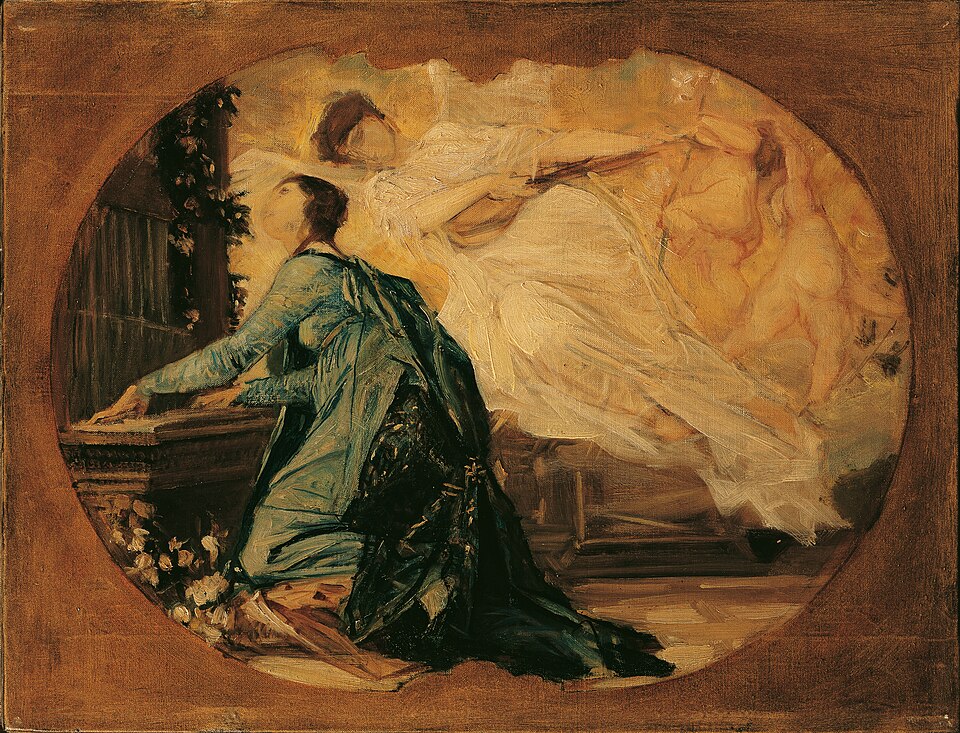
The height of the creative power is found during a Catholic Mass, when sacred music does what the Church says it is made to do. It serves the glory of God and the sanctification of the faithful, and it helps unity of hearts happen through the union of voices.
The next time you go to Mass, especially during the Easter season, when the Church celebrates Christ as new life, whether you are Catholic or not—I strongly encourage you to sing along with the music and take note of how your heart is moved.
*
This blog is part of our series celebrating the legacies of Tolkien and Lewis. Keep an eye on Spotify, Fio, and Apple Podcasts for related episodes of A Resounding Yes! podcast. Subscribe to our NEW YouTube channel for clips and shorts of our wonderful guests.
For more on the power of sacred music, we encourage you to read our review of Cardinal Robert Sarah’s The Song of the Lamb.
- Peter Kreeft, The Philosophy of Tolkien: The Worldview Behind The Lord of the Rings, 161. ↩︎
- Kreeft, 162. ↩︎
- 2 Corinthians 5:17. ↩︎
- Musicam Sacram, no. 4. ↩︎
- Musicam Sacram, no. 5. ↩︎
- St. Augustine. ↩︎
Matthew Chicoine is a left-handed cradle Catholic who enjoys reading everything Tolkien, C.S. Lewis, Chesterton and is also an avid comic book fan. He is married to his wife Jennifer and has four children. Matthew’s favorite saints include Athanasius, Catherine of Siena, Teresa of Avila, Philip Neri and John of the Cross. Discover more of his Catholic content by visiting thesimplecatholic.blog.
Leave a Reply


access for free →
These professionally crafted, spiritually-inspired templates will help you create scroll-stopping posts in minutes. Skip the design struggle and share your message beautifully. Customize in Canva, post and get noticed. And yes, it's totally okay to swipe these!