


Love Given Away: Magnifica humanitas,
Michael Iskander, & Eucharistic Truth
By Franci Revel Eckensberger, Lead Editor
This past Sunday, on the Feast of Corpus Christi, our deacon concluded his homily with a simple enough lesson:
“Love isn’t love until you give it away.”
I spent the rest of my day trying to figure out why this line sounded so familiar. It had moved me deeply—I would go so far as to say that it galvanized me in the face of both everyday discontents and deeper wounds that I’d brought to the Lord that morning. Eventually, Google informed me that it comes most directly from the reprise of “Sixteen Going on Seventeen” from The Sound of Music, a film I have a fondness for but don’t know by heart.
Maria, now Liesl von Trapp’s stepmother, is comforting Liesl after her beloved Rolf has joined the Hitler Youth:
A bell is no bell till you ring it,
A song is no song till you sing it,
And love in your heart
Wasn’t put there to stay—
Love isn’t love till you give it away.
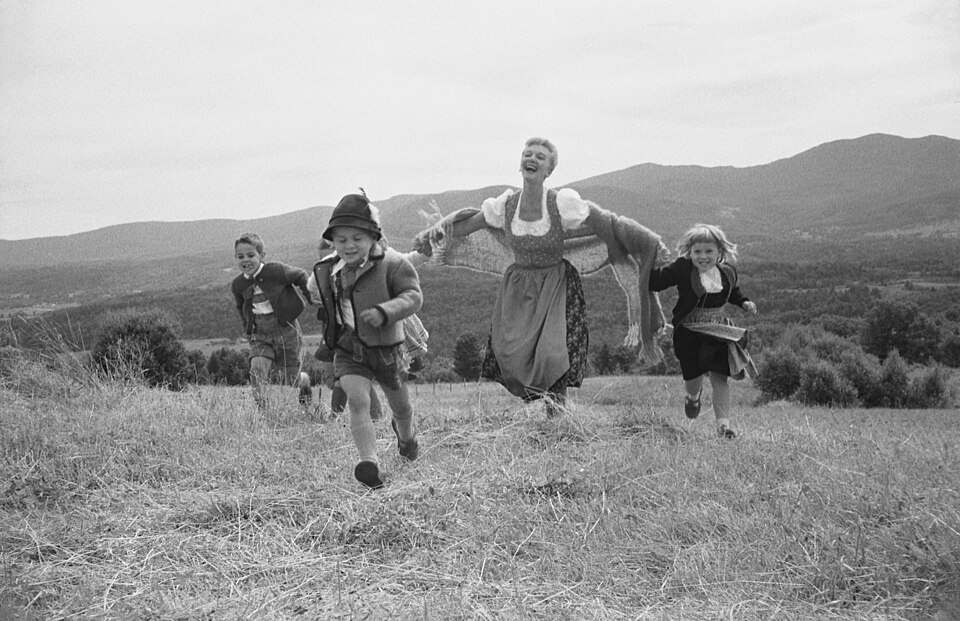
A strange place to find a Eucharistic truth, perhaps, but not an unfitting one: a mother, a former nun, comforting a daughter wounded not only by a beloved, but an ideology of hatred and unspeakable cruelty, voicing the fundamental Christian truth that love is not merely something felt or privately cherished. Our hearts can be fickle day by day—love, as they say, is a verb.
No one has greater love than this, to lay down one’s life for one’s friends.
John 15:13
And Love has a Body that He gives of completely. We fulfill our selfhood as His children not by optimization, but by following Him; not only by living, but by giving as He gave. Made in His image, we become most fully ourselves when we become gifts of love. And how high a calling it is to embody this love in our relationships, vocations, and creative pursuits.
Saying Yes
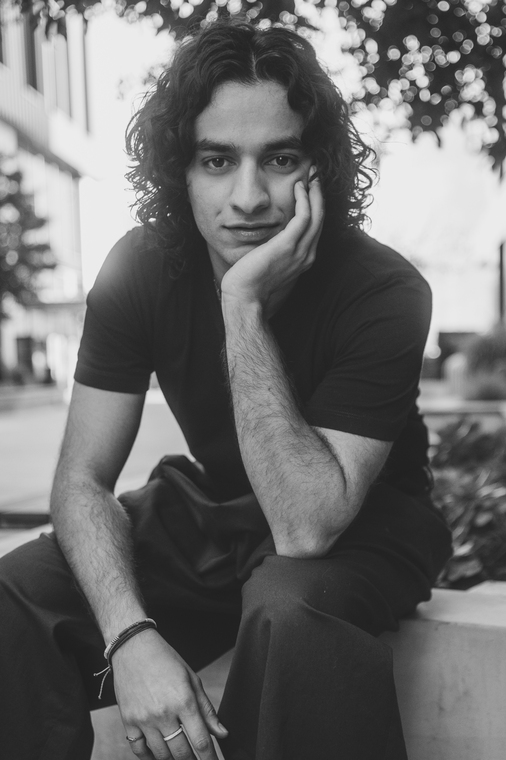
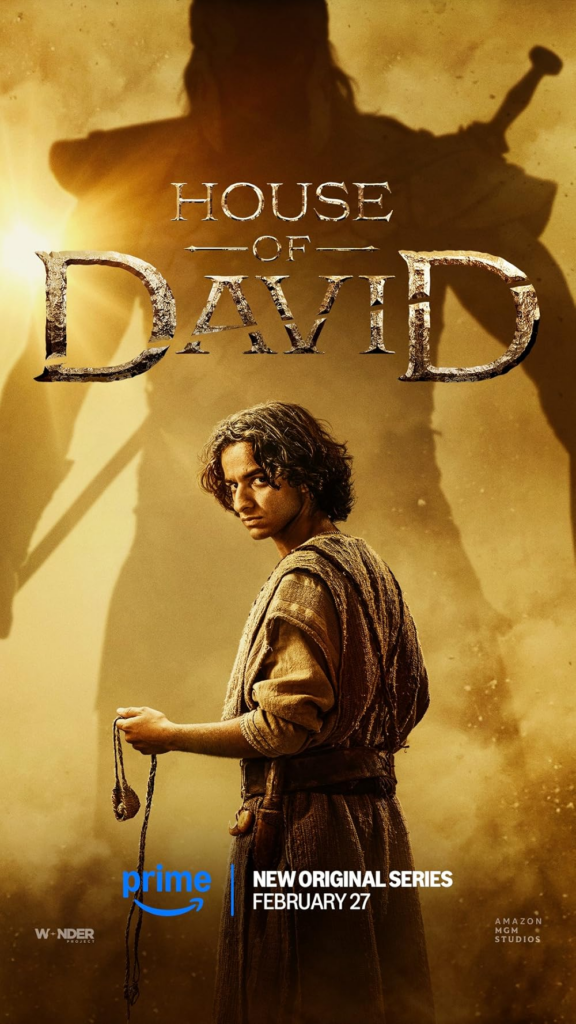
For Michael Iskander, the 24-year-old Egyptian-born American actor and musician who plays David in Prime Video’s House of David, the silence before the Host became the place where his own search for truth came to rest.
Michael’s background is largely in theater. His Broadway debut was a role in the Tony Award-winning musical Kimberly Akimbo. David is his first screen role, a truly remarkable achievement and entrance into television.
“There is nothing in the world that would ever replace the moment where a priest holds up the Body and it’s just silence,” Michael says in this week’s episode of our podcast, A Resounding Yes! “That is truth to me.”
His witness became the living entry point to our conversation about Pope Leo XIV’s first encyclical, Magnifica humanitas. Joined by Fr. John Johnson, pastor of the historic St. Joseph Catholic Church in Paloma & Fig’s home base of Macon, Georgia, Christina Sabo spoke with Michael about art, truth, conversion, and what it means to remain fully human before God at this moment in history.
The episode began where A Resounding Yes! always begins—with the story of a guest’s yes to the Lord. Every fiat is unique, unrepeatable, irreplaceable, and beloved to Him. To tell the story of one’s yes is itself a sacred creative offering: a way of remembering grace, giving glory to God, and letting others be invited and transformed by the narrative arc of one’s walk with Christ.
For Michael, one of his decisive assents came during his conversion to Catholicism. Raised in the Coptic Orthodox Church, he reached out to a priest as a young adult after studying the history of Christianity. Over breakfast, after hearing Michael’s questions and the seriousness of his study, the priest asked him simply: “So, do you want to be Catholic?”
“You very rarely get asked this question,” Michael said. “And I can’t be the one to say no.” He went on to say that he knew that there was “nobody who opened that door other than the Lord” in regards to his role on House of David: “When God opens a door, no one can close it.” This receptivity is at the heart of Mary’s fiat and at the heart of every Christian life. It is also part of what our age most threatens to erase.
As Human as It Gets
Early on in Magnifica humanitas, Pope Leo frames the “ongoing digital revolution” through two biblical images: Babel and Jerusalem.
Babel is the work of human hands turned inward—a city built to “make a name” for its people, unified by power, technology, and ambition, singularly impressive yet severed from God. He references “Babel syndrome” as “the idolatry of profit that sacrifices the weak, a uniformity that neutralizes differences, and the pretense that a single language—even a digital one—can translate everything, including the mystery of the person, into data and performance. The risk of dehumanization . . . is an ancient and ever-new temptation that today takes on a technical guise.”1
Jerusalem, however, is rebuilt slowly and prayerfully. With each person taking up his portion of the wall, this rebuilding rejects the monument to selfhood and becomes a dwelling place not for collective uniformity but for communion—”namely the harmony that arises when all persons assume their own role and recognize that their strength comes from the Lord.”2
The Holy Father makes clear that we must decide what kind of city we are building. The role of a creator has always carried these stakes, uniquely capable of protecting others from forces of degradation, dehumanization, and hatred. A role, a song, a story, a canvas, a child or two or eight, a marriage, a home; every creative ability gifted by God can become one portion of the wall, one more act of restoration, one more gift returned to God and given outward in love. I think of my infant daughter and the smiles she gives away so freely, seemingly designed to get me to smile back—even this smallest act of making and gifting is ordered toward communion.
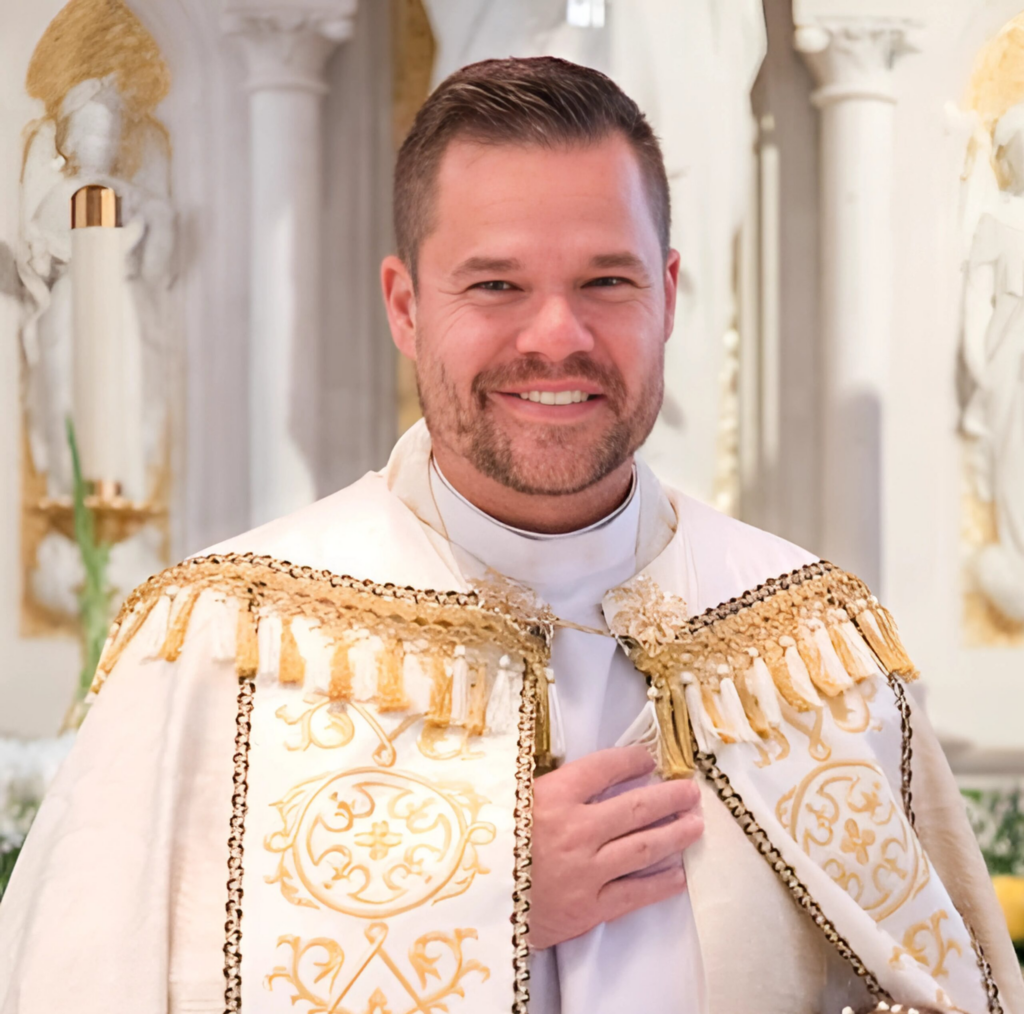
“The deepest truths of humanity really come out in literature, storytelling, and beauty that you see in art,” Fr. Johnson said on the podcast. In turn, Michael spoke about approaching his role as David not as a chance to center himself, but as an opportunity to give the work back to God. “The story is not about David,” he said. “The story is about God choosing someone who will represent Him and lead His people and be a shepherd to His people.”
One of Scripture’s most beloved figures, David is “as human as it gets,” as Michael puts it—“as faulty as it gets and as redemptive as it gets.” Inspired by the words of his priest, Michael said that his purpose is now no longer to just be an actor: “It’s no longer [to be] a musician. My purpose is to be a child of God and to bring people to him through the talents that he’s given me . . . God didn’t make robots, God made souls.”
In his encyclical, Pope Leo insists that the Church must defend the full grandeur of the human person in a technological age. He calls on not only Scripture, Saints, and councils, but also on figures such as Hannah Arendt, Plato, Viktor Frankl, Tolkien, and Beethoven, drawing widely to defend both the dignity and inherent vulnerability of the human person. Turning to Arendt, Pope Leo makes it clear that when people can no longer distinguish fact from fiction, they become easier to control. Truth—as is already known well by the Christian—is a condition of freedom.
Then you will know the truth, and the truth will set you free.
John 8:32
Artificial intelligence is far from the first force to tempt us to think of the human person as data, output, or utility. It will always remain Christ who provides the most compelling evidence that we are anything but these cheap degradations. We are ensouled, free, morally responsible, and designed for communion—and it is His evidence that is most effective in defending us in the battle for our hearts, attention, and souls.
As Fr. Johnson noted during the conversation, the Church does not speak about artificial intelligence as an outsider to the modern world. “There’s no part of the world and human—of anything genuinely human—that [the Church is] not going to have wisdom to speak to.” The dignity Pope Leo defends is the same dignity the Church invites us to contemplate, especially on Corpus Christi: of the human person revealed and redeemed in Christ, Gentle First Truth, rather than in any ideology or political framework.
Michael spoke directly to the hunger for this Truth, especially among younger people. In a world where even video footage can be convincingly manipulated, many are longing, he suggested, for “complete truth.”
“For those who are looking for life and feel like they’re dead, they’re looking for Jesus.” Michael said.
I don’t want to be taught a version that’s going to make me feel good about myself . . . I want Jesus.
Michael Iskander
And there he finds Him: the source and summit of Truth, the Eucharist, the antidote to unreality, the ultimate Gift of self. Lifted above the altar for us to not only witness but to receive.
Pope Leo writes in the encyclical’s conclusion that the Incarnation and the Paschal Mystery “reveal God entering into our human condition and transforming it through the gift of himself. This gift remains present and active in the Eucharist, in which the Lord gives himself and gathers the Church together, so that his offering becomes the principle of unity and source of new life.”3 Sacred storytelling is by its nature bound to this reality of the Gospel.
Beyond entertaining us, a story like David’s returns us to the drama of grace and gives it a human face. Within it, we see our callings and our sorrows, and we see God’s grand story and his refusal to abandon us to the hands of death. The saints and sinners of Scripture had wounds, egos, bodies, and souls. As Michael Iskander reminds us throughout this podcast and through the brilliance of his performance, God chooses persons. Bathed in the light of Christ, the truth of that personhood remains always irreducible.
Returning to the Altar
At the end of the episode, Michael shared that daily Mass brings him his greatest joy. When he cannot go, he said, his day feels thrown off. In the middle of a rising acting career, his deepest joy is not visibility or applause, but meeting the Lord at the altar.
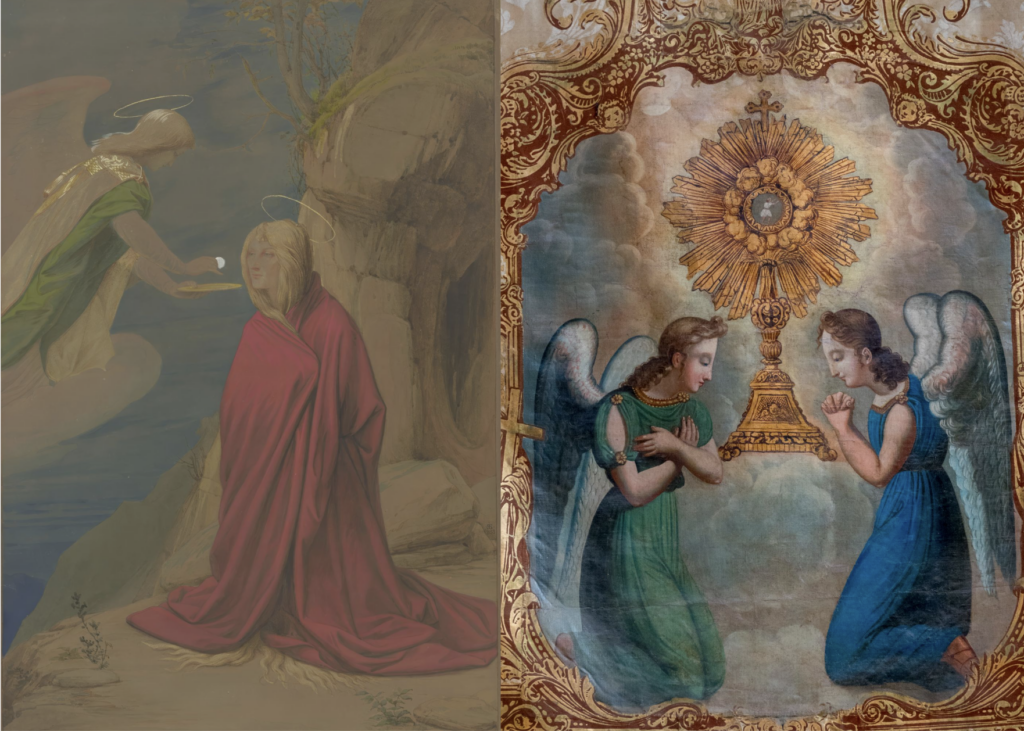
We must not worship what we have made. We must return to Him who made us. Love has a Body, which is given up for you—the Eucharist remains the answer we seek in every question this moment raises for us.
And however remarkable its capacities may be, no machine can ever kneel.
Michael Iskander and Father John Johnson are in conversation with Christina Sabo on A Resounding Yes! podcast, out now. Listen today on Spotify, Apple Podcasts, & Fio. Subscribe to our new YouTube channel to see clips of this brilliant discussion.
- Pope Leo XIV, Magnifica humanitas, §10. ↩︎
- Pope Leo XIV, §8. ↩︎
- Pope Leo XIV, §234. ↩︎

Lead Editor Franci Revel Eckensberger holds a Master of Fine Arts in Poetry from Cornell University. With years of experience as a copyeditor for academics, fellow writers, and various small businesses, she takes pride in maintaining clarity, consistency, and beauty in each client’s voice.
Franci finds grace and insight in the Catholic Church’s rich relationship to language and invites that relationship to influence both her literary and editorial work. Saint Cecilia and Catherine of Siena continue to play a vital role in her journey to the faith as an artist. She lives in coastal Delaware with her husband and daughter.
Leave a Reply


access for free →
These professionally crafted, spiritually-inspired templates will help you create scroll-stopping posts in minutes. Skip the design struggle and share your message beautifully. Customize in Canva, post and get noticed. And yes, it's totally okay to swipe these!