

Enough Grace for the Moment
By Bailey Cornelius, Lead Project Manager
**This review contains major spoilers for the film Project Hail Mary.**
I have never felt the desire to go to space. In fact, the idea of spaceflight terrifies me. It is not only the thought of being strapped to a rocket or hurtling upward at impossible speeds, but also knowing my loved ones are out of reach and that, if something goes wrong, rescue may not be possible.
To put it simply: I do not have an adventurer’s spirit.
I marvel at those who do, and sometimes I wish I shared it. But I know myself well enough to admire from a distance those willing to step into the unknown.
Dr. Tom Jones spent almost three decades preparing to do exactly what terrifies me.
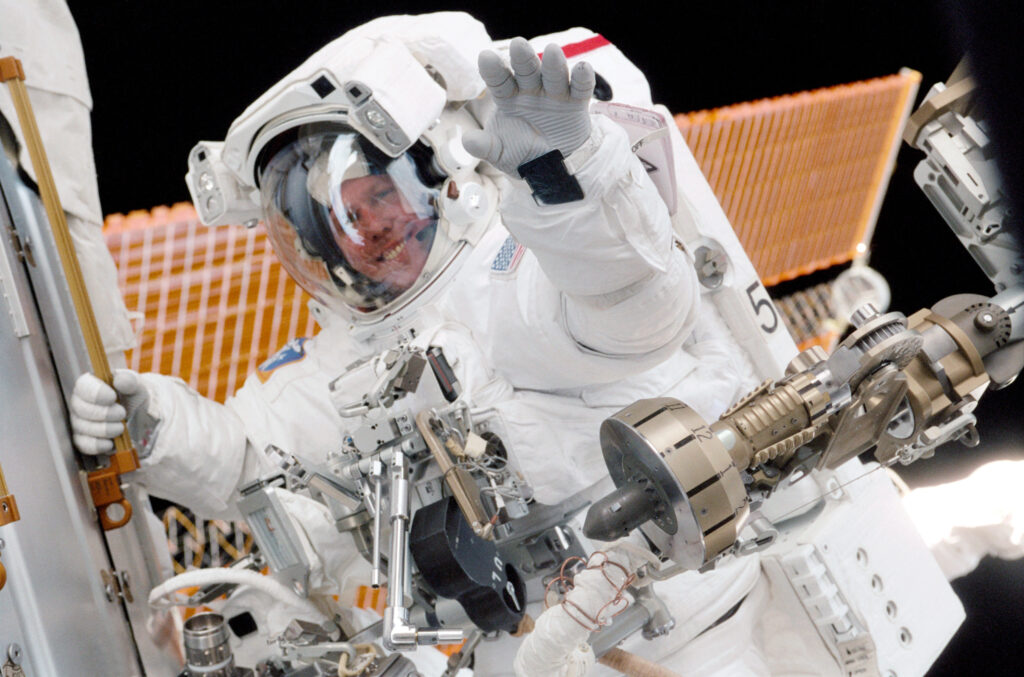
Growing up during the height of the Space Race, Jones recalled in a recent interview on our podcast, A Resounding Yes!, how seriously the whole country followed American space missions. Magazine covers and live television broadcasts documented launches through splashdowns. Teachers paused their regular lessons and rolled televisions into classrooms so students could watch history unfold.
From fourth grade onward, Jones dreamed of becoming an astronaut, and he did not keep the dream to himself. His parents, teachers, and the nuns at his Catholic school encouraged him to believe it was possible: with hard work and good grades, perhaps he could apply someday.
As Jones pursued his dream, he faced several obstacles, the first of which could have stopped him in his tracks. Boyhood asthma initially disqualified him from entering the Air Force Academy as a pilot candidate. He enrolled as a non-flyer, betting that he would pass another physical once he arrived in Colorado. There, away from the Maryland weather that triggered his hay fever, he passed and qualified for pilot training.
After completing pilot training, the Air Force assigned Jones to a B-52 bomber unit, a disappointing blow that he thought had sealed his fate for good. But as a copilot and eventual commander of a six-person crew, he learned to coordinate with and lead others—the same kind of teamwork he would later need aboard a spacecraft.
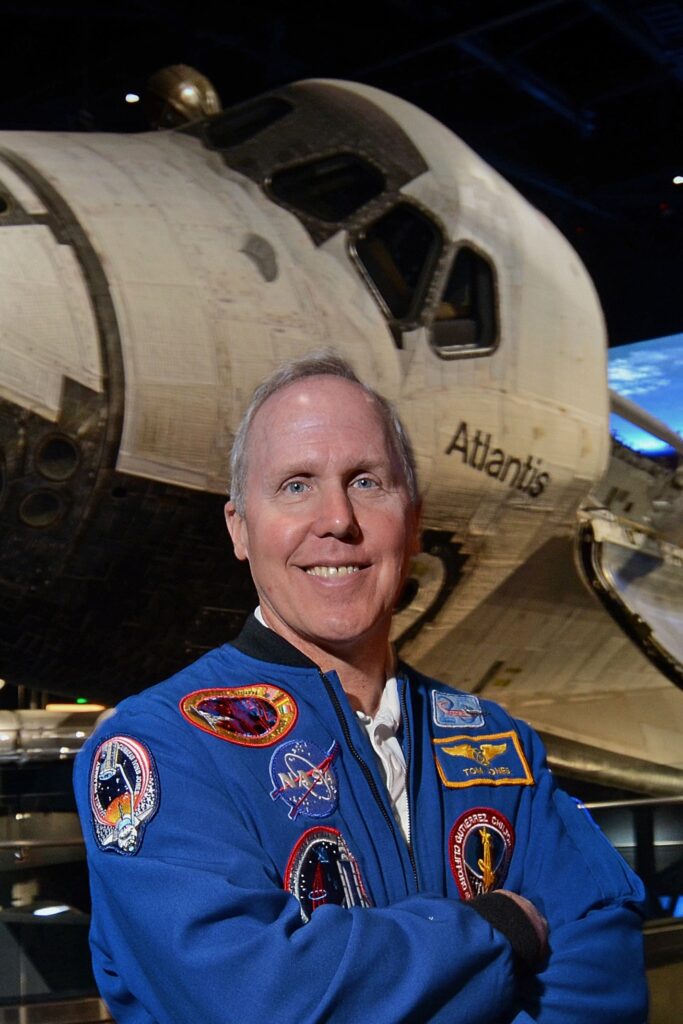
Jones continued pursuing another route. He earned his Ph.D. in planetary sciences and applied to NASA’s astronaut corps.
At each point, Jones could have interpreted the detour as a door slamming shut and given up on his dream. But he said yes to the next path available to him. He could not know where those yeses would lead. In 1990, NASA selected him as an astronaut.
Four years later, Jones sat on the launchpad at Kennedy Space Center waiting for liftoff. During the roughly three hours between strapping in and engine ignition, the launch controllers performed most of the preparations, leaving him stretches of quiet in which to consider what lay ahead and pray. He asked God for the ability to use his talents well, work with his crewmates, and do what was expected of him. Knowing that his family and friends were also praying, Jones believed he had “as much of God’s grace as I would need to get through it.”
Jones’ words about grace reminded me of
the recent film Project Hail Mary.
**Major spoilers ahead . . .**
Dr. Ryland Grace awakens aboard the spaceship Hail Mary with no memory of why he is there. As his memories return, we learn that he was a middle school science teacher whose promising scientific career had been derailed by a controversial paper arguing that extraterrestrial life might not require water. That same paper eventually brought Eva Stratt, the leader of the international effort to save Earth, to his classroom. When an unknown organism began consuming the sun’s energy, Grace’s research made him uniquely valuable to the effort to stop it.
Unlike Jones, Grace did not spend decades saying yes to space. After the mission’s original scientist was killed, Stratt ordered Grace to take his place on a voyage that was not expected to return. Grace refused and attempted to flee, but Stratt had him placed aboard the Hail Mary in an induced coma.
As the film progresses, Grace encounters Rocky, an alien who is also the sole survivor of a mission to save a dying star. The two learn to communicate and come to depend upon each other as they search for a solution that can save both their worlds. After Grace becomes badly injured, Rocky breaks out of his protective enclosure to save his friend. Rocky also chooses to delay his own return trip home by six years to provide Grace with enough fuel to return to Earth.
They say their goodbyes and begin their journeys home, but Grace discovers the solution to save their worlds will destroy Rocky’s ship. He cannot both return to Earth and save Rocky. Grace chooses Rocky. He sends probes containing his research and samples toward Earth, just as the mission required, and heads toward Rocky.
The flashbacks show that Grace had no immediate family awaiting him on Earth. It was not his attachment to another person that kept him from saying yes to the mission, but his fear of dying. Yet during the mission, he forms a bond with Rocky that becomes stronger than his desire to return home. His fear does not disappear, but he chooses to turn back because he cannot abandon the friend he has come to love.
Is it a happy accident that the main character of this film has the surname Grace? I’m choosing to say yes—and perhaps it is not a cosmic accident at all.
The Hail Mary carries a man named Ryland Grace. “Hail, full of grace” are the words the angel Gabriel uses to greet Mary before her fiat. Mary answers with a freely given yes: “Let it be done to me according to your word.” She could not know everything her yes would require, but she entrusted herself to God without controlling the outcome.
Ryland Grace’s fiat does not come at the beginning of the original mission. His yes comes when he chooses to save his friend, but grace has preceded that decision. It has come through Rocky’s friendship, through Ryland’s own talents, and through the sacrifices already made for him. Yet grace does not remove his freedom.
As I said in the beginning, I do not have an adventurer’s spirit. But I can learn from both Dr. Jones and Dr. Grace.
Dr. Jones repeatedly said yes to a vocation he deeply desired, even when the path was unclear. Ryland Grace finally says yes when love requires him to put aside his fear. The willingness to enter the unknown may not come naturally to everyone.
But saying yes does not require the absence of fear. It requires responding to the grace available in that particular moment.
Don’t miss Tom Jones on today’s episode of our podcast, A Resounding Yes! The full video is available on our YouTube channel below, with audio on Spotify, Apple Podcasts, and Fio.
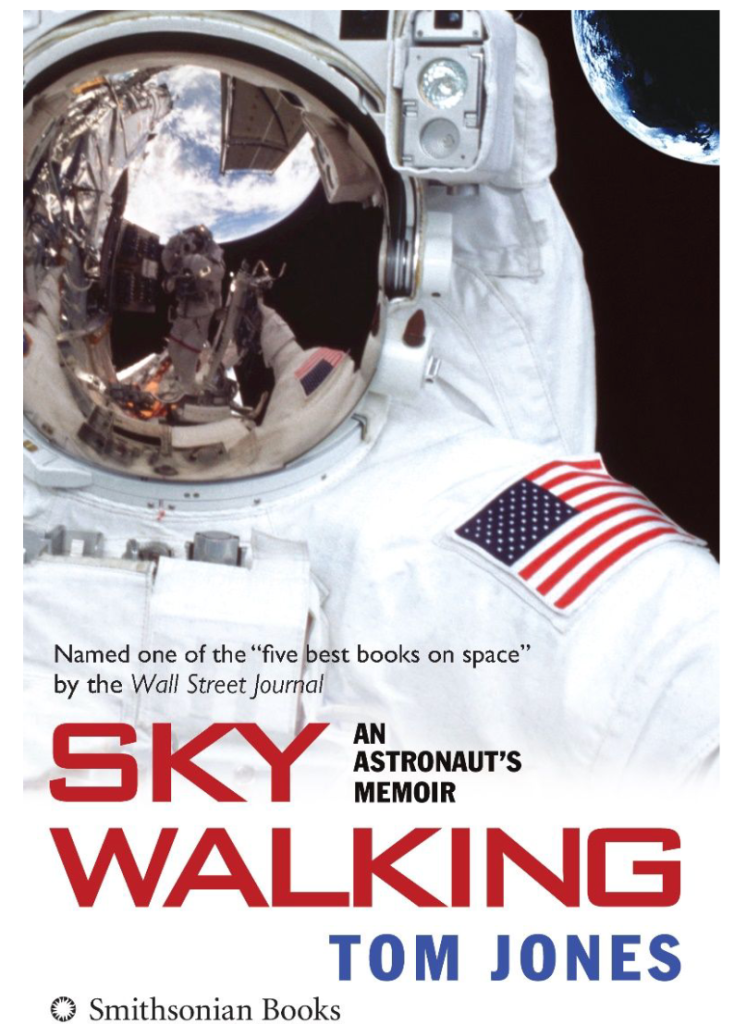
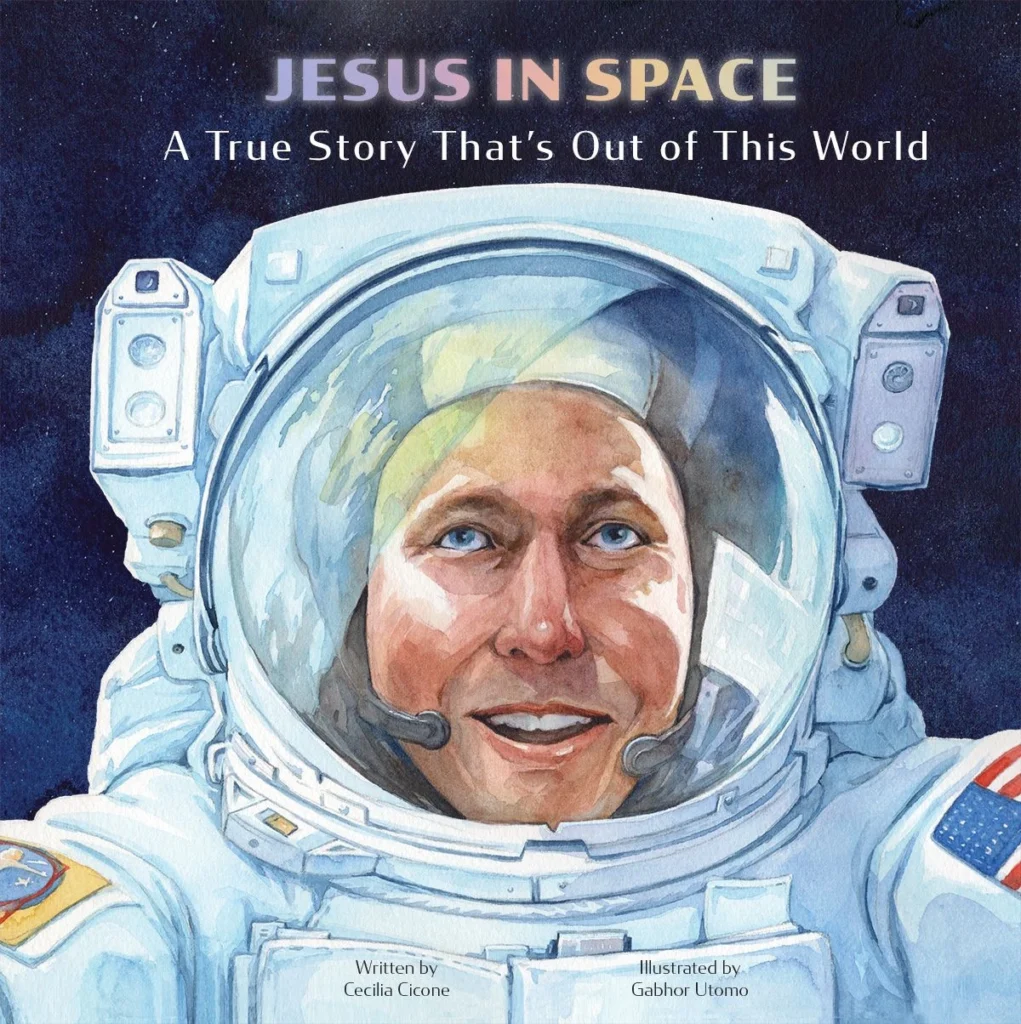
Purchase Tom Jones’ memoir, Sky Walking, here. Purchase Jesus in Space, a picture book about Tom Jones by Cecilia Cicone, from Pauline Books & Media here.

Bailey Cornelius is a writer, Catholic convert and former high school theology teacher with an MA in Theological Studies. She writes about faith, family, and the tensions of ordinary human life. Her work has appeared in Evangelization & Culture, the digital edition of Word on Fire’s magazine. She also writes at Tree, Trough, Table on Substack and lives in Northern Virginia with her husband and two children.
Leave a Reply


access for free →
These professionally crafted, spiritually-inspired templates will help you create scroll-stopping posts in minutes. Skip the design struggle and share your message beautifully. Customize in Canva, post and get noticed. And yes, it's totally okay to swipe these!